The Pleasure of Dressing

Today I wore a blue pinstripe suit, a white double-cuff shirt and a rather serious tie. Nothing particularly extraordinary. In fact, a few years ago, this would have been a fairly usual way for me to dress.
But this morning, while looking at myself in the mirror, I had a thought that made me smile: I hardly ever dress like this anymore.
And the curious thing is that I have never been as interested in clothing as I am now. I haven't moved away from tailoring; if anything, I'm probably closer to it than ever. What has changed is the way I understand it and, above all, how I incorporate it into my everyday life.


Part of that change began when I moved to Spain a few years ago. Here, I started experiencing the seasons properly again and, with them, discovered many more possibilities when it comes to dressing. Autumn allows us to return to tweed, flannel and corduroy; winter brings cashmere, overcoats, scarves and layering; then warmer weather arrives, bringing linen, more open-weave wool fabrics and lighter constructions back into the picture.
There is something lovely about not being able to wear everything all year round. You begin to look forward to certain garments. The first tweed jacket when the temperature drops, an overcoat returning to the wardrobe after summer, or those linen trousers that announce that warmer weather has finally arrived.
With the changing seasons, I also began experimenting much more. A tweed jacket with a different pair of trousers, a Teba jacket, a good casual jacket, a sweater underneath a jacket. Ties in wool, silk or linen, pocket squares, scarves, good shoes, watches, belts, braces or even a good umbrella. Layers can completely transform an outfit, as can different textures.


It isn't about adding things simply for the sake of adding them. Every element should bring something to the table without making the outfit look overly thought out. Perhaps that is one of the things I enjoy most today: being able to experiment while maintaining a certain sense of coherence.
And almost without realising it, the suit stopped being the centre of my wardrobe. But everything I have always loved about tailoring is still there. Proportions, the drape of a fabric, the length of a jacket, a good collar, generous lapels, hand-finished details and, above all, the way a garment relates to the body still matter enormously to me.
A pair of high-rise trousers with double pleats can be made from classic flannel, but also from corduroy, cotton or linen. A jacket can have deeply sartorial construction and proportions without feeling formal. For me, that is precisely one of the most interesting aspects of the way we dress today.
"The heritage is still there. What has changed is the way we use it."


Perhaps that is also why I have started thinking about how easily we confuse being formally dressed with being well dressed. We see plenty of men wearing suits every day, and simply wearing one seems to automatically suggest a certain degree of elegance. But that isn't always the case.
A jacket that is too short or too tight, shoulders that are out of proportion with the body, or trousers with the wrong rise or volume can completely alter the silhouette. A suit, which should enhance it, can end up achieving precisely the opposite.
One of the greatest virtues of good tailoring has always been its understanding of the body. A well-cut jacket can balance the shoulders and create a silhouette; trousers with the right rise and volume can completely change a man's proportions. And when everything works together, you often don't even need to know anything about clothing to notice it. You simply look at that person and think that they are well dressed.
"A suit can make us look more formal. Not necessarily more elegant."


And the opposite is also true. Some of the most elegant men I come across in my everyday life are older gentlemen who clearly no longer have any need to dress for an office. They hardly ever wear suits.
Perhaps they wear a tweed jacket, a sweater, a pair of flannel trousers and some good shoes that they have probably been wearing for years. Sometimes a scarf or a pocket square. Nothing seems particularly complicated, and yet everything is in its place.
There is something about the natural way they wear their clothes that I find particularly interesting. They know their bodies, understand their proportions and know what works for them. After many years, clothing stops feeling like something imposed on them and simply becomes part of who they are.
To me, that has a great deal to do with elegance.


It also reminds me that good taste has relatively little to do with money. You can buy an extraordinarily expensive jacket and have no idea how to wear it, just as someone can have a fairly simple wardrobe and dress exceptionally well.
Developing good taste takes time. You have to observe, try things on, make mistakes and try again. Feel fabrics, understand why flannel behaves differently from linen, discover what a good jacket can do for your figure, and find the colours, shoes and proportions that work for you.
You have to be curious.


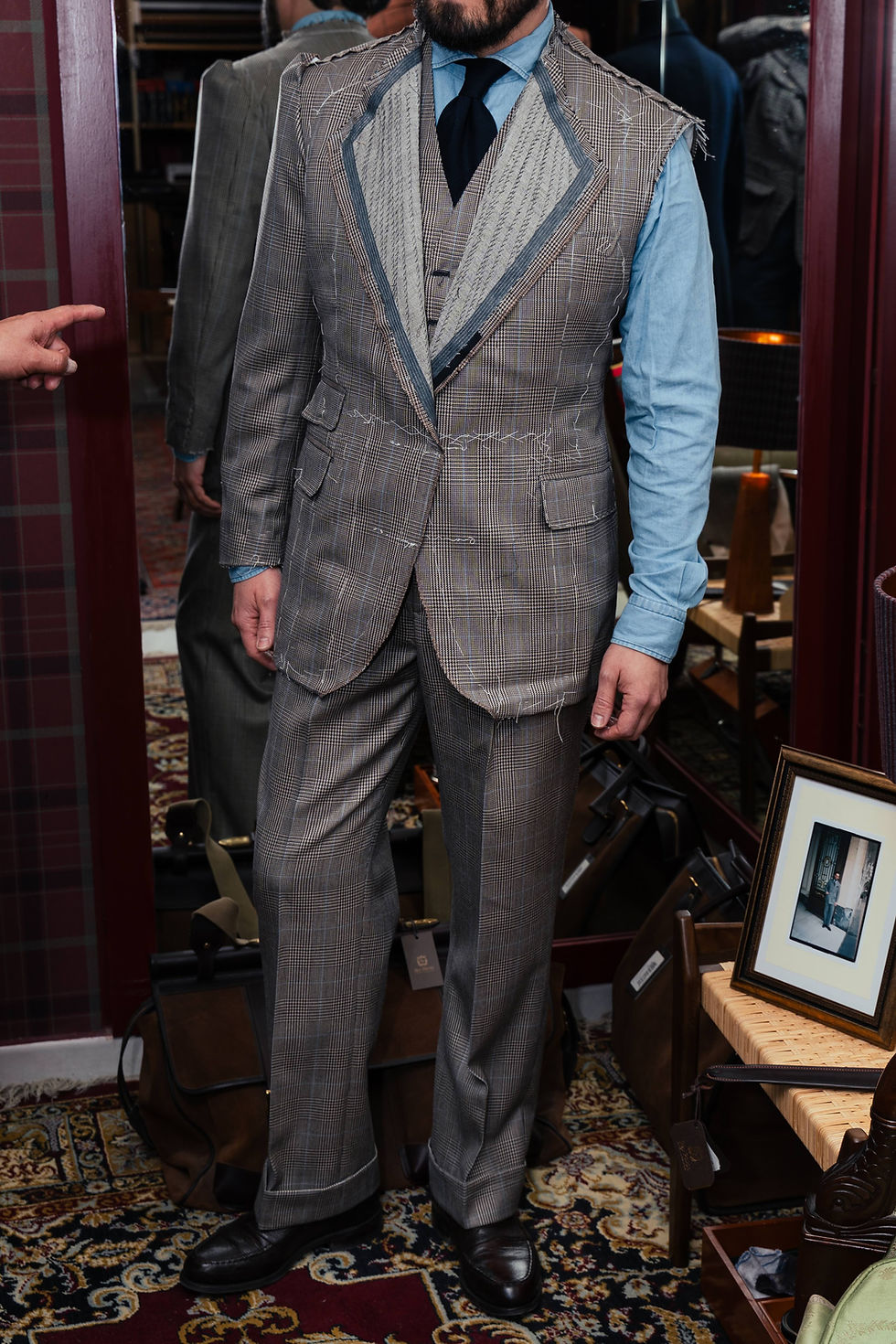
Perhaps that is why I still find the idea of tailoring so appealing. Not simply as a place you visit when you have a wedding and need a suit, but as it has always been: a place you return to.
Over time, a good tailor comes to know quite a lot about you. Naturally, they know your body, but also your tastes, your work, where you travel, how you live, what you already have in your wardrobe and what you actually need. In a way, they become someone you trust with everything related to the way you dress.
That relationship seems increasingly interesting to me in a world where we can buy practically anything in a matter of seconds. Walking into a tailor's shop, talking to someone who knows their craft, feeling the fabrics, asking questions, trying different proportions and gradually building a wardrobe is a completely different experience from simply buying a garment.


I don't think we need to return to a time when men wore suits every day. I certainly don't want that. I enjoy being able to wear a tweed jacket tomorrow, a Teba jacket the day after, and bring out my linen trousers again when June arrives far too much.
But I do think it is worth bringing back something of that old culture surrounding the way we dress: talking to a tailor, getting to know a good shoemaker, asking about fabrics, repairing shoes we love, looking forward to autumn so we can wear a particular jacket again. In short, paying attention and learning to enjoy the process once more.
Because perhaps we have become too accustomed to buying clothes.
And have spent considerably less time learning how to dress.
Photos: Casa Sartorial


Comments