The History of Rolex: How Hans Wilsdorf Created the World's Most Famous Luxury Watch Brand

Rolex is one of the most recognizable names in the watch industry today, but its story began long before the crown logo became a global symbol of prestige. The brand’s founder, Hans Wilsdorf, was born in 1881 and lost both of his parents at a young age. After becoming an orphan, he and his relatives were cared for by their uncles, who sold the family’s successful tool business and ensured that Hans received an education at elite schools. There, he distinguished himself through his aptitude for languages and mathematics. Following a period of extensive travel, he joined the Swiss watch company Cuno Korten in La Chaux-de-Fonds, where he was responsible for winding and testing hundreds of watches every day. This experience provided him with invaluable insight into watchmaking. In 1903, he moved to London and met Alfred Davis, who would later become his business partner.
In 1905, Wilsdorf and Davis established Wilsdorf & Davis. At a time when pocket watches dominated high society and wristwatches were often considered unreliable and lacking masculinity, Wilsdorf believed that wristwatches could be both accurate and modern. The company sourced movements from Swiss manufacturer Hermann Aegler, placed them in British-made cases, and supplied them to London jewelers, who sold them under their own names. The only indication of their origin was the “W&D” stamp engraved on the back of the case.
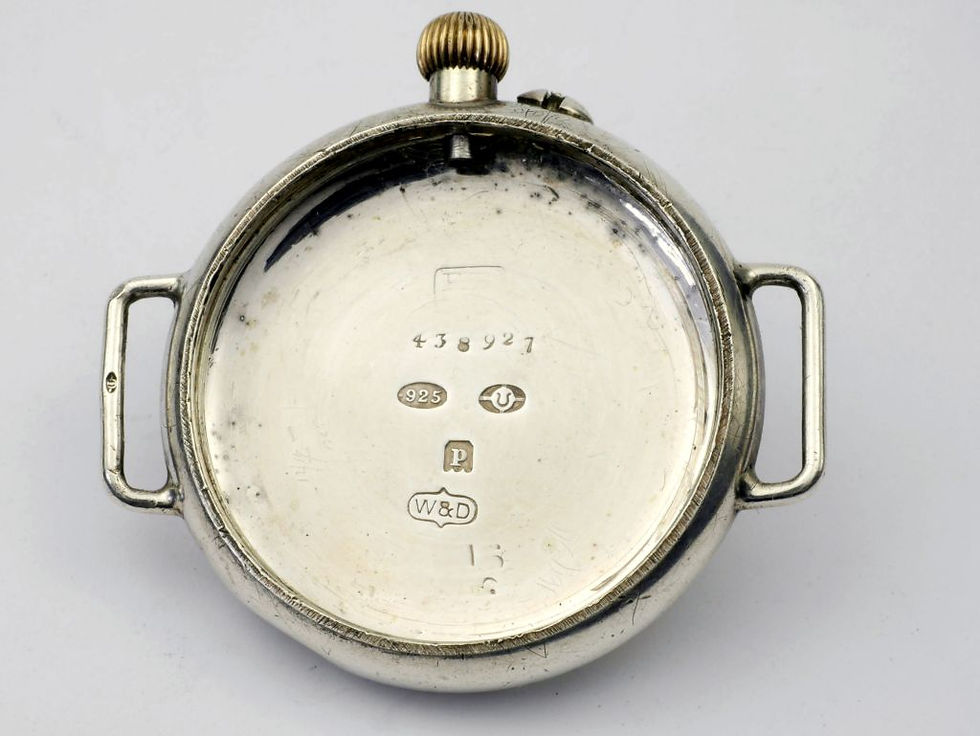
Three years later, Wilsdorf registered the name Rolex. He later explained that he had experimented with countless combinations of letters before one morning, while riding on the upper deck of a horse-drawn omnibus in London, the name “Rolex” suddenly came to him. In 1911, Rolex opened its first office in La Chaux-de-Fonds, while production continued in the facilities of Maison Aegler in Bienne.
Success soon followed. In 1910, Rolex became the first wristwatch ever to receive the Swiss Certificate of Chronometric Precision. Four years later, the Kew Observatory in England awarded Rolex a Class A precision certificate, an honor previously reserved exclusively for marine chronometers. Yet Wilsdorf remained unsatisfied. While these certifications proved accuracy under laboratory conditions, he believed a watch should perform flawlessly in any environment encountered by its owner.
In 1915, facing high taxes on precious metals and increasing hostility toward his German surname during wartime, Wilsdorf relocated Rolex’s headquarters from London to Bienne. Four years later, the company moved again, settling permanently in Geneva under the name Montres Rolex SA. Throughout the following decade, Rolex concentrated on solving two major challenges: dust and water resistance.
The breakthrough arrived in 1926 with the introduction of the Oyster case. This hermetically sealed design protected the movement from both water and dust while still allowing the watch to be adjusted. Although the Oyster is now inseparable from Rolex’s identity, the original patent belonged to Swiss watchmakers Paul Perregaux and Georges Peret.
Recognizing the importance of their invention, Wilsdorf acquired the patent rights and launched an ambitious marketing campaign around it.
The Oyster gained worldwide attention when British swimmer Mercedes Gleitze wore one around her neck during her attempt to swim across the English Channel. Rolex celebrated the achievement through extensive advertising and famously displayed Oyster watches submerged in aquariums in store windows.

Five years later, Rolex achieved another milestone. In 1931, the company introduced the Oyster Perpetual, featuring a self-winding mechanism powered by a centrally mounted rotor that harnessed the wearer’s wrist movements. That same year, Rolex also trademarked its now-famous five-pointed crown logo. Having addressed accuracy, water resistance, and winding efficiency, Rolex turned its attention toward exploration, sport, and performance. During the interwar years, Rolex watches accompanied numerous pioneers on record-breaking achievements. In 1933, Lieutenant Colonel Stewart Blacker wore a Rolex Oyster while becoming the first person to photograph Mount Everest from the air. A year later, aviators Owen Cathcart-Jones and Ken Waller completed a record-breaking round trip between England and Australia, praising the precision of their Rolex watches despite dramatic climate changes. Similar endorsements came from Sir Malcolm Campbell after setting a land speed record at Bonneville Salt Flats.

These accomplishments proved to be powerful marketing tools. By the outbreak of World War II, many RAF pilots were purchasing Rolex watches as reliable alternatives to standard military-issued timepieces. When numerous pilots were captured and lost their watches, Wilsdorf offered to replace them free of charge. Among the most famous cases was Corporal Charles James Nutting, who ordered a stainless steel Oyster Chronograph reference 3525 from Stalag Luft III prison camp in 1943. Wilsdorf personally replied to confirm the order.
The postwar years brought a succession of landmark models. In 1945, Rolex introduced the Air-King as a tribute to RAF pilots, and it quickly became popular among aviators. That same year saw the launch of the Datejust, the first self-winding wristwatch with an automatically changing date display. Accompanying it was the Jubilee bracelet, which would become nearly as iconic as the watch itself.
In 1953, Rolex unveiled the Explorer to commemorate Sir Edmund Hillary and Tenzing Norgay’s successful ascent of Mount Everest. One year later came the Submariner, a model subjected to extensive real-world testing, including deep-sea dives and prolonged underwater exposure.
During the mid-1950s, Pan Am approached Rolex with a request for a watch capable of tracking two time zones simultaneously. The result was the GMT-Master, whose innovative movement allowed users to monitor both local and GMT time. In 1956, Rolex introduced the Milgauss, designed to withstand strong magnetic fields, and the Day-Date, a luxury watch crafted exclusively in gold or platinum and notable for displaying both the day and the date. Shortly afterward, the Lady-Datejust became Rolex’s first women’s watch to earn chronometer certification.
Chronographs also played a significant role in Rolex’s evolution. The Oyster Chronograph reference 6234 is widely regarded as a precursor to the Daytona, while the reference 6238 became known among collectors as the “Pre-Daytona.” In 1963, Rolex introduced the Cosmograph reference 6239, and the name “Daytona” gradually began appearing on the dial. Although it initially struggled to gain popularity, the model’s fortunes changed dramatically when Paul Newman began wearing one. Alongside Steve McQueen, Newman helped transform Rolex from a respected manufacturer into a global symbol of style and status.

In the late 1960s, Rolex launched the Cellini collection, named after the renowned Italian artist Benvenuto Cellini. The line focused on elegant precious-metal watches that stood apart from the brand’s professional sports models. Around the same period, Rolex unveiled the Sea-Dweller, the first watch equipped with a helium escape valve, followed by the Explorer II in the early 1970s, a model designed specifically for cave exploration.
The early 1980s brought the GMT-Master II, featuring the new Caliber 3085 movement and enhanced functionality for tracking multiple time zones. During the 1990s, Rolex introduced the Yacht-Master, conceived as a more luxurious interpretation of the Submariner. The first model appeared in 1992 in a 40 mm gold case, followed two years later by a 35 mm version.
After two decades without launching an entirely new model line, Rolex unveiled the Sky-Dweller in 2012. Designed for international travelers, the 42 mm watch combined practicality with sophistication, and its first references were 326938, 326939, and 326135.
Although Rolex’s history is often summarized through a handful of its most famous models, the brand’s story extends far beyond them. Technological innovation, partnerships with explorers, pilots, athletes, and adventurers, and a continuous drive for improvement have all contributed to building one of the most influential and recognizable names in watchmaking history.
Pictures: Bob's Watches, Vintage Watch Straps, Hodinkee, Rolex Magazine
Source: Hrvatski Satovi


Comments